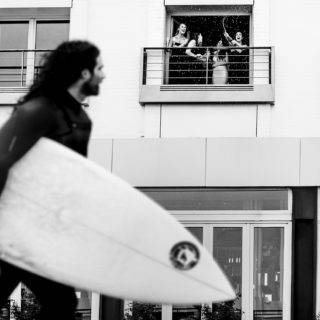
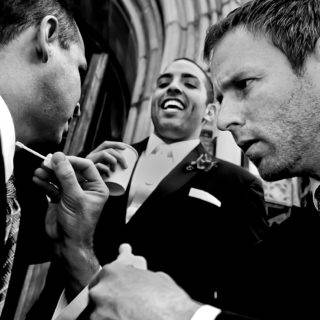
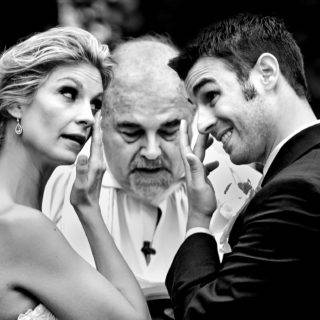
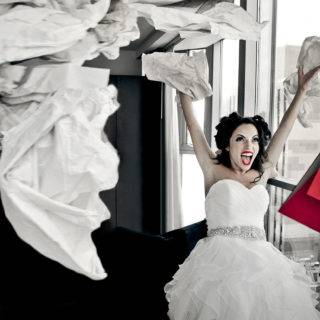
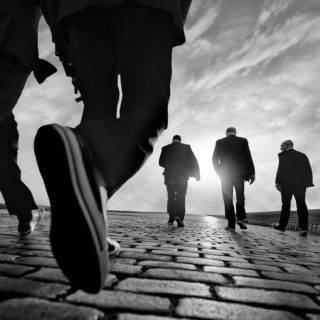
Choosing a wedding photographer is not only about deciding which photographs you like. It is also about deciding how you want your wedding day to feel while those photographs are being made.
Some couples love the idea of beautifully directed portraits, carefully organized family photographs, and knowing exactly what the camera is doing. Others would rather forget about the camera altogether and have someone quietly document the tears, laughter, movement, conversations, and unexpected moments as they happen.
That is the heart of the documentary vs traditional wedding photography conversation.
Traditional wedding photography generally places more emphasis on direction, posing, formal group photographs, and carefully arranged compositions. Documentary wedding photography places more emphasis on observation, genuine interactions, and the story unfolding naturally in front of the camera.
Neither approach has to mean that your wedding gallery contains only one type of photograph. In fact, many couples want a combination: real, unscripted moments throughout the day with beautifully composed portraits when the occasion calls for them.
Understanding the difference helps you choose a photographer whose way of working matches both your personality and the experience you want to have.
What Is Documentary Wedding Photography?
Documentary wedding photography is an observational approach to photographing a wedding.
Instead of constantly stopping the action to create a photograph, the photographer watches what is already happening and looks for meaningful moments within it.
That might be the expression on a parent’s face as the bride walks down the aisle. It could be friends laughing during cocktail hour, a nervous conversation before the ceremony, grandparents watching the first dance, or the couple sharing a quiet glance while everyone else is celebrating.
The photograph is not created by asking everyone to recreate the emotion.
The photographer waits for the emotion to happen.
This style is also commonly described using terms such as photojournalistic, reportage, candid, natural, or storytelling wedding photography. The terminology varies between photographers, but the central idea is similar: the photographer observes rather than directing every moment.
The important word is story.
A documentary wedding gallery should not simply show what the couple looked like. It should give you a sense of what the day felt like.
What Is Traditional Wedding Photography?
Traditional wedding photography is more structured and directed.
The photographer takes an active role in organizing people, choosing positions, directing poses, and creating specific compositions.
Think of the classic family portrait where everyone is arranged carefully and looking toward the camera. Think of a formal portrait of the couple with a beautiful architectural background. Think of a carefully organized wedding-party photograph where everyone has a defined position.
These photographs can be elegant, polished, and timeless.
Traditional photography is especially useful when there are specific photographs you know you want.
If you want a formal photograph with your grandparents, your parents, your siblings, and your entire wedding party, someone needs to organize those people and make sure everyone is looking in the right direction.
That is not a weakness of traditional photography.
It is one of its strengths.
Documentary vs Traditional Wedding Photography: The Main Difference
The simplest way to understand the difference is to think about who controls the moment.
With traditional photography, the photographer frequently creates the conditions for the photograph.
With documentary photography, the photographer responds to conditions that already exist.
A traditional photographer might move you into a particular position, adjust your hands, ask you to look at your partner, and create the composition.
A documentary photographer might notice that you naturally reach for your partner’s hand while waiting for the ceremony and photograph that moment without interrupting it.
One approach creates.
The other observes.
But good wedding photography is rarely as black and white as those two descriptions suggest.
An experienced documentary photographer may still give you direction during portraits. A traditional photographer may still capture candid moments. Most wedding days naturally contain a mixture of both.
The more useful question is not, “Which label does this photographer use?”
It is, “How does this photographer actually work during a wedding?”
Documentary vs Traditional: A Quick Comparison
| Feature | Documentary Wedding Photography | Traditional Wedding Photography |
| Main approach | Observational and story-driven | Directed and structured |
| Photographer’s role | Watches, anticipates, and responds | Directs, arranges, and composes |
| Posing | Limited, especially during real moments | More frequent |
| Candid moments | Major part of the coverage | Usually included but less central |
| Family portraits | Directed efficiently when needed | Major part of formal coverage |
| Couple portraits | Often lightly guided | More deliberately posed |
| Ceremony | Primarily observed | Important moments are photographed with more direction around portraits |
| Reception | Emphasis on interactions and atmosphere | Planned events and formal photographs receive strong attention |
| Timeline | Can allow more uninterrupted time with guests | Often requires dedicated portrait blocks |
| Overall feeling | Natural, spontaneous, story-focused | Polished, organized, classic |
The difference is not about one style being capable of producing beautiful photographs while the other is not.
It is about what the photographer prioritizes.
What Does Documentary Wedding Photography Actually Look Like?
Imagine the moment just before a ceremony begins.
The room is full of people, but nobody is standing perfectly still.
A parent is trying not to cry.
A friend whispers something to the person next to them.
The groom takes a breath.
Someone fixes a veil.
The flower girl is distracted.
The bride looks toward the doorway.
A documentary photographer watches all of those things at once.
There may be no second chance.
The photographer has to anticipate where the emotion is developing, choose the right position, work with the available light, and make the photograph without turning the moment into a performance.
That is why documentary photography can look effortless while actually requiring considerable experience.
The photographer is not waiting for someone to say, “Now take the picture.”
They have to recognize the moment before it disappears.
What Does Traditional Wedding Photography Look Like?
Now imagine the family portrait portion of the day.
The photographer brings everyone together.
Parents stand beside the couple.
Siblings move into position.
Grandparents sit or stand where they can be comfortable.
The photographer checks the background, lighting, expressions, hands, clothing, and composition.
Then the photograph is made.
This is traditional photography at its most useful.
There is nothing spontaneous about organizing ten or fifteen people for a family portrait, and that is exactly why direction helps.
You do not want to discover after your wedding that everyone assumed someone else would organize the photograph of you with your grandparents.
Traditional direction provides certainty.
Is Documentary Photography the Same as Candid Wedding Photography?
The terms are closely related, but they are not necessarily identical.
A candid photograph is generally an image captured without the subject deliberately posing for the camera.
Documentary photography goes further by emphasizing the story and context of the day.
A photographer could take a candid photograph of a couple laughing against a beautiful background.
A documentary photographer is also thinking about what that laugh means within the larger story.
What happened immediately before it?
Who caused the reaction?
What were the people around them doing?
What does the scene say about the atmosphere of the wedding?
Documentary photography is therefore not simply “take pictures when people aren’t looking.”
It is an intentional way of observing and telling a story.
Does Documentary Wedding Photography Mean No Posing?
Not necessarily.
This is one of the biggest misconceptions about documentary wedding photography.
A documentary photographer can still create beautiful portraits.
The difference is often in how much direction is used and when.
During the ceremony, speeches, cocktail hour, dinner, and dancing, a documentary approach may mean stepping back and allowing things to happen.
During couple portraits, the photographer may give gentle instructions.
You might be asked to walk together, move closer, turn toward the light, hold hands, or look at one another.
That is different from repeatedly stopping the couple and constructing every expression.
The goal is to provide enough direction to help you feel comfortable without making the entire experience feel like a photo shoot.
Matthew Sowa describes his own approach in a similar way: his work combines photojournalism and portrait photography, and he notes that some stylistic direction can be necessary while still creating authentic images.
Can You Have Family Photos With a Documentary Photographer?
Absolutely.
Choosing documentary wedding photography does not mean giving up photographs with your parents, grandparents, siblings, or wedding party.
In fact, family photographs are one area where some direction is essential.
Your photographer needs to know who should be included, where everyone should stand, and which combinations matter to you.
The difference is that those formal photographs may represent a relatively small part of the overall coverage.
Once the family portraits are complete, the photographer can return to observing the wedding as it unfolds.
This is why you should not assume that “documentary” means your photographer will refuse to pose anyone.
Ask them directly.
A good consultation should clarify how they handle family formals, couple portraits, and the rest of the wedding day.
Can Documentary and Traditional Wedding Photography Be Combined?
Yes.
For many couples, a blended approach is the most practical way to photograph a wedding.
You can have:
- Documentary coverage during getting ready
- Natural photographs during the ceremony
- Formal family portraits
- A short, guided couple portrait session
- Documentary coverage during cocktail hour
- Carefully composed reception portraits
- Candid photographs throughout the celebration
This allows you to have the photographs your family expects while still preserving the spontaneous moments you care about.
Matthew Sowa’s published work reflects this kind of balance. His site describes a primarily journalistic approach alongside classic portraiture, while his broader wedding-style guidance places documentary, lifestyle, editorial, and traditional approaches along a spectrum rather than treating them as completely isolated categories.
For couples who want natural photographs but still want elegant portraits, that balance can be especially valuable.
Documentary vs Traditional Wedding Photography for Couples Who Hate Posing
If you feel uncomfortable in front of a camera, the style of your photographer matters.
Constant posing can make camera-shy couples more aware of themselves.
You begin thinking about your smile.
Then your hands.
Then your posture.
Then whether you are looking at the right place.
That can make an otherwise intimate moment feel like a performance.
A documentary approach can reduce that pressure because much of the day is photographed while you are simply living it.
You are talking to your friends.
Walking into the ceremony.
Hugging your parents.
Listening to speeches.
Dancing.
Laughing.
Eating dinner.
You do not have to know what to do.
Your photographer’s job is to recognize the moments worth photographing.
For portraits, gentle direction can still help you feel confident without requiring you to become an experienced model.
Which Style Takes Less Time on the Wedding Day?
The answer depends on the photographer and the amount of formal photography you want.
A heavily directed approach can require dedicated blocks for couple portraits, wedding-party photographs, family combinations, and other posed setups.
A documentary approach generally allows more of the day to unfold without interruption.
That does not mean documentary photography requires no photography timeline.
You still need to allow enough time for family portraits, couple portraits, and important events.
The advantage is that the photographer does not need to turn every part of the day into a separate portrait session.
This can be particularly valuable if your priority is spending as much of your wedding day as possible with your guests.
Does Traditional Photography Guarantee Better Family Photos?
Traditional direction can be very effective for formal family photographs because the photographer controls the arrangement.
Everyone can be positioned carefully.
Expressions can be checked.
The composition can be repeated if someone blinks.
Important family combinations can be completed systematically.
That reliability is one reason formal wedding photography has remained important for generations.
Even couples who prefer documentary photography usually want some traditional family portraits.
There is no contradiction in wanting both.
A photograph of your grandparents looking at the camera is a different kind of memory from a candid photograph of them laughing together.
Both can be meaningful.
Which Style Creates More Emotional Wedding Photos?
Emotion does not belong exclusively to one photography style.
A traditional portrait can be deeply emotional.
A documentary photograph can be visually restrained.
The emotional quality of an image depends on the photographer’s timing, composition, light, relationship with the subjects, and ability to recognize meaningful moments.
What documentary photography changes is the opportunity for emotion to appear without being deliberately created.
A parent does not need to be told to look emotional.
A bride does not need to be instructed to cry.
Friends do not need to be asked to laugh.
The photographer watches.
When something real happens, the photograph records it.
Documentary vs Traditional Wedding Photography for Family-Centered Weddings
If your wedding includes a large extended family, multiple cultural traditions, or several generations, it is especially important to discuss your expectations before booking.
A documentary approach can be excellent for capturing the relationships and interactions surrounding those traditions.
But some formal photographs may require planning.
For example, if you want a photograph with every member of your extended family, your photographer needs to know that in advance.
The same is true for cultural ceremonies.
The photographer should understand what is happening, which moments are significant, and when they need to be in the right position.
Matthew Sowa’s experience with cultural and multi-day celebrations is one example of why this conversation matters. His South Asian wedding photography work describes a photojournalistic approach that remains unobtrusive during rituals while also incorporating formal and editorial portraits.
What About Wedding Details?
Documentary photography does not mean ignoring details.
Your wedding dress, invitation suite, rings, flowers, venue, table settings, stationery, and personal objects all contribute to the story.
The difference is how those details are incorporated.
A traditional photographer may spend a dedicated portion of the day creating carefully arranged detailed photographs.
A documentary photographer may photograph those details while they naturally exist within the environment, while also creating intentional detail compositions when appropriate.
Both approaches can produce beautiful results.
The key is telling your photographer which details have personal meaning.
A family heirloom may look like an ordinary piece of jewelry to someone who does not know its history.
To you, it may be one of the most important objects in the entire wedding.
How Do You Know If a Photographer Is Really Documentary?
This is one of the most important questions to ask.
The word “documentary” is used widely in wedding photography, and photographers can use the label to describe very different approaches.
Do not judge a photographer’s style from five Instagram photographs.
Ask to see complete wedding galleries.
Look at the photographs between the big moments.
Look at getting ready.
Look at the guests.
Look at dinner.
Look at the dance floor.
Look at family interactions.
Look at ceremonies.
Look at moments where nobody is looking directly at the camera.
Then look at the portraits.
Do they still feel natural?
Can the photographer create a beautiful formal image without making it look stiff?
A full gallery gives you a much clearer picture of how the photographer actually works.
Matthew Sowa’s portfolio and photojournalistic work emphasize an unobtrusive approach while retaining attention to composition, movement, background, and portraiture.
What Should You Ask a Documentary Wedding Photographer?
Before booking, ask questions that reveal how the photographer actually works.
How much of the day is candid?
Do not be satisfied with a general answer. Ask how they approach getting ready, the ceremony, cocktail hour, dinner, speeches, and dancing.
How do you handle family portraits?
A documentary photographer should still have a clear system for organizing important family combinations.
How much direction do you give during couple portraits?
You want to know whether you will be left completely alone or guided through relaxed, intentional portraits.
Can we see a full wedding gallery?
This is one of the most valuable questions you can ask.
A highlight gallery shows what a photographer considers their best work.
A full gallery shows how they photograph an actual wedding.
How do you work in difficult lighting?
Documentary photographers often have to work quickly in changing conditions.
Ask to see examples from dark receptions, mixed lighting, indoor ceremonies, nighttime celebrations, and other challenging environments.
What happens if the timeline changes?
Weddings rarely run perfectly on schedule.
An experienced photographer should be able to adapt without losing the important photographs.
What Should You Ask a Traditional Wedding Photographer?
If you are considering a traditional approach, ask about the structure of the photography day.
Find out:
- How much time is needed for portraits?
- How are family photographs organized?
- How many formal combinations are included?
- How much direction will you receive?
- Will the photographer help create a photography timeline?
- How much candid coverage is included?
- How much time will be spent photographing details?
- Can you see complete wedding galleries?
Traditional photography should not mean that every photograph looks identical.
A skilled photographer can still create variety within a structured approach.
How Much Does Documentary Wedding Photography Cost?
There is no universal price difference between documentary and traditional wedding photography.
The cost of wedding photography depends on factors such as the photographer’s experience, location, coverage hours, number of photographers, deliverables, album products, editing, and overall service.
The style label by itself does not determine what you will pay.
That is another reason to compare complete photography services rather than assuming documentary photography automatically costs more or less.
When comparing photographers, look at what is included in the coverage and, more importantly, whether the photographer’s work matches the type of photographs you want.
Is Documentary Wedding Photography Worth It?
For couples who care deeply about genuine moments and want to remember the atmosphere of their wedding, documentary coverage can be a compelling choice.
The value is not simply that the photographs look candid.
It is that the photographs can preserve moments you did not realize were happening.
Years later, you may remember the big events.
But a photograph can bring back something much smaller.
The expression your mother made while watching you.
The friend who could not stop laughing during the speeches.
The way your partner reached for your hand.
The moment your grandparents danced.
The chaos immediately after the ceremony.
The five quiet minutes when you were finally alone.
Those moments cannot be recreated.
Is Traditional Wedding Photography Worth It?
Traditional photography remains valuable for couples who want a strong collection of formal portraits and clearly organized family photographs.
There is something powerful about having a photograph in which everyone important is present, properly composed, and looking toward the camera.
Those photographs can become family records.
They can be framed.
They can be placed in albums.
They can be passed down.
The question is not whether traditional photography is valuable.
The question is whether its level of structure matches the way you want your wedding photographed.
What If We Want Both?
Tell your photographer.
You do not have to choose an extreme.
You can ask for a documentary approach throughout most of the day while reserving time for:
- Family formals
- Wedding-party portraits
- Couple portraits
- A few editorial-style photographs
- Important cultural or religious photographs
- Formal photographs with grandparents
- Special details
This is often the most practical conversation to have during a consultation.
Instead of asking, “Are you documentary or traditional?”
Ask:
“How do you balance documentary coverage with portraits and family photographs?”
The answer will tell you much more.
Documentary vs Traditional Wedding Photography in NYC
New York City adds another dimension to the decision.
A wedding can move from a quiet preparation room to a historic ceremony space, from an elegant ballroom to a crowded city street, or from a rooftop to a late-night dance floor.
There are constant changes in light, background, movement, and atmosphere.
A documentary photographer has to be comfortable responding to those changes.
A portrait photographer also needs to know when to slow things down and create a more controlled image.
That combination can be particularly useful in New York.
Matthew Sowa Photography is based in Manhattan and describes its wedding work as primarily journalistic while incorporating classic portraiture and a fashion-influenced visual approach. The studio also emphasizes an unobtrusive presence that allows the wedding day to flow naturally.
Why Full Wedding Galleries Matter More Than a Highlight Reel
A photographer’s best five photographs do not tell you how they photograph a wedding.
A full gallery does.
When reviewing one, ask yourself:
Do the photographs tell a story?
Are there photographs of people when they are not aware of the camera?
Do the family photographs look organized?
Do the couple portraits feel natural?
Are there emotional photographs from the ceremony?
Does the reception feel alive?
Are there photographs of guests, not just the couple?
Does the quality remain consistent from beginning to end?
And perhaps most importantly:
Can you imagine your own wedding being photographed this way?
If the answer is yes, you may have found a style that fits.
The Difference You Will Feel on Your Wedding Day
The biggest difference between documentary and traditional wedding photography may not become obvious when you first look at a photograph.
It becomes obvious while you are living the day.
A heavily directed approach means you may spend more time being positioned, arranged, and photographed.
A documentary approach generally gives you more freedom to remain inside the experience.
Neither experience is automatically better.
Some couples enjoy being photographed.
They like direction.
They want polished portraits.
They want every family grouping carefully organized.
Others want the photographer to disappear into the background.
They want to spend their day with their people.
They want to look at their photographs years later and feel as though they have stepped back into the room.
Knowing which experience sounds more like you is often the clearest way to decide.
Documentary vs Traditional Wedding Photography: Which Should You Choose?
The right style depends on what you want your photographs to preserve.
If you want highly organized portraits, formal family photographs, carefully directed compositions, and a classic visual structure, traditional photography may fit your priorities.
If you want the atmosphere, relationships, reactions, and unexpected moments to play a central role in your wedding gallery, documentary photography may feel more natural.
If you want both, look for a photographer who genuinely knows how to combine the two.
That last point is important.
You should not have to sacrifice beautiful portraits just because you want candid photographs.
And you should not have to spend your entire wedding posing simply because you want a few formal images.
The strongest approach for many couples is a thoughtful balance: observe when the moment should be left alone, direct when direction is useful, and create portraits without losing the personality of the people in them.
Frequently Asked Questions
What is the difference between documentary and traditional wedding photography?
Documentary wedding photography focuses primarily on observing and photographing genuine moments as they happen, with limited direction. Traditional wedding photography places more emphasis on posed portraits, formal group photographs, planned compositions, and photographer-led direction. Many wedding photographers combine elements of both approaches.
Is documentary wedding photography the same as candid photography?
They overlap, but documentary photography is broader than simply taking candid photographs. Documentary wedding photography uses observation and storytelling to record the atmosphere, relationships, reactions, and events of the day as they unfold.
Does documentary wedding photography include posed family photos?
Yes. A documentary photographer can still photograph formal family groups, wedding-party portraits, and couple portraits. The distinction is that these directed photographs usually represent only part of the overall coverage.
Will a documentary wedding photographer tell us how to pose?
They may provide gentle direction, particularly during couple portraits. The goal is usually to help with positioning, light, movement, or composition without making the interaction feel forced.
Is documentary wedding photography good for people who are awkward in front of the camera?
It can be a comfortable option because much of the wedding is photographed while you are naturally interacting with your partner, family, and friends. During portraits, a photographer can provide enough direction to keep you comfortable without requiring complicated poses.
Can I have both documentary and traditional wedding photography?
Yes. Many couples combine documentary coverage with formal family portraits and a guided couple portrait session. Discuss the balance you want with your photographer before booking.
Do documentary photographers use a shot list?
They can. A short list of important family combinations, people, traditions, and personal details can be helpful. The photographer can then use their experience to document the rest of the day without treating every moment as a checklist.
Does documentary wedding photography take less time?
It can reduce the amount of time spent on repeated posed setups, but you still need time for essential family and couple portraits. Your photographer should help build a realistic timeline around the photographs that matter to you.
Is traditional wedding photography outdated?
No. Traditional wedding photography remains useful for couples who value formal portraits, organized family photographs, and carefully controlled compositions. The important question is whether that approach matches your preferences.
How do I know if a photographer is truly documentary?
Review complete wedding galleries rather than only social-media highlights. Look for consistent candid coverage throughout getting ready, the ceremony, cocktail hour, reception, and dancing. Also ask the photographer how much direction they typically give and how they handle family portraits.
What is photojournalistic wedding photography?
Photojournalistic wedding photography is closely related to documentary wedding photography. It emphasizes observation, storytelling, genuine moments, and minimal interference while the wedding unfolds.
Is documentary wedding photography more expensive?
Not automatically. Wedding photography pricing depends on the photographer, experience, location, coverage, products, and services included. The documentary or traditional label alone does not determine the price.
Can documentary wedding photography still look elegant?
Yes. Documentary photography can be visually sophisticated while remaining natural. Composition, lighting, timing, perspective, and editing all contribute to the finished photograph.
A Wedding Gallery Should Feel Like Your Wedding
Your wedding photographs should do more than prove that certain events happened.
They should bring the day back to you.
The sound of everyone laughing during the speeches.
The look your partner gave you before the ceremony.
Your father’s expression when he saw you.
Your friends filling the dance floor.
Your grandparents are sitting together.
The quiet moment between one event and the next.
The photographs that matter most are often the ones you could never have planned.
That is the strength of documentary wedding photography.
But there is also a place for the photograph where everyone is together, the portrait you frame on the wall, and the carefully composed image that makes you stop when you turn the page.
That is the strength of traditional photography.
You do not necessarily have to choose one and reject the other.
You need a photographer who understands when to observe, when to direct, when to step back, and when to create something intentionally.
For couples planning a New York City wedding, Matthew Sowa Photography brings together a photojournalistic instinct with contemporary portraiture and a fashion-influenced eye. The result is a wedding gallery designed to preserve both the moments that happened naturally and the portraits you will want to return to for years.
Your wedding should never feel like a production built around the camera.
The photography should work around the wedding.
And when you look back at the finished gallery, you should recognize not just how everything looked—but how it felt to be there.