Your wedding day will move quickly. Getting ready turns into the ceremony, the ceremony becomes portraits, portraits lead into cocktail hour, and suddenly the reception is underway. In the middle of all that movement, there are dozens of small moments you will want to remember.
A wedding photography shot list can help make sure the important photographs are not overlooked.
But a good shot list should not turn your wedding photographer into someone who simply checks boxes all day. The purpose is to communicate what matters most to you while leaving room for the photographer to document the unexpected moments that make your wedding unique.
The best approach is to create a list of priorities rather than a rigid script.
This guide walks through the essential wedding photos to consider, from getting ready and details to family portraits, the ceremony, couple portraits, reception, and the final exit.
What Is a Wedding Photography Shot List?
A wedding photography shot list is a collection of photographs you would like your photographer to capture during your wedding day.
It can include standard moments such as the exchange of rings, first kiss, family portraits, first dance, and cake cutting—as well as personal requests that your photographer could not reasonably know without being told.
For example, perhaps your grandmother is wearing a family heirloom. Maybe you have handwritten letters to exchange before the ceremony. Perhaps you want a photograph with a childhood friend who is flying across the country for the wedding.
Those details belong on your list.
Current wedding-planning guidance similarly recommends using a shot list to communicate specific people, details, and combinations that are important to the couple while allowing the photographer to adapt the list to the actual wedding day.
Do You Really Need a Wedding Photography Shot List?
Yes—but probably not in the way you think.
You do not need a 150-item checklist that dictates every photograph your photographer must take.
An experienced wedding photographer already knows to photograph the major events of a wedding day. What your photographer cannot automatically know is which relatives are especially important, which details have sentimental value, or which family combinations you absolutely want.
That is where your list becomes useful.
Think of it as a communication tool.
It tells your photographer what matters to you, while their experience determines how and when those photographs are created.
This distinction is important because weddings are unpredictable. A perfectly timed candid moment may happen while everyone is moving from one part of the venue to another. If your photographer is focused exclusively on completing a checklist, that moment could disappear.
A thoughtful shot list protects the essentials without sacrificing storytelling.
How to Create a Wedding Photography Shot List
Start by dividing the wedding day into sections.
A practical structure is:
- Getting ready
- Wedding details
- First look or pre-ceremony moments
- Ceremony
- Family portraits
- Wedding party portraits
- Couple portraits
- Cocktail hour
- Reception details
- Reception events
- Candid guest photographs
- Grand exit
Then identify the photographs that are especially meaningful to you.
Do not try to list every possible image.
Instead, ask yourself one question:
What would I regret not having photographed?
The answer will usually produce a much more useful list.
Wedding Getting-Ready Photo Shot List
The getting-ready portion of the day is often where the story begins.
Before the ceremony, there is anticipation, nervousness, excitement, laughter, and plenty of small details that will eventually disappear once the celebration begins.
Bride or Partner Getting Ready
Consider including:
- Wedding dress before it is worn
- Wedding shoes
- Veil
- Jewelry
- Perfume
- Invitation suite
- Rings
- Bouquet
- Wedding accessories
- Hair and makeup
- Final makeup touches
- Hair styling
- Putting on earrings
- Putting on shoes
- Zipping or buttoning the dress
- Adjusting the veil
- Putting on cufflinks
- Tying a tie or bow tie
- Adjusting a jacket
- Putting on a watch
- Friends helping with final details
- Parent helping with the dress
- Wedding party getting ready together
- Candid conversations
- Champagne or celebratory drinks, if part of the morning
- Quiet moments alone before leaving for the ceremony
The goal is not to photograph every object individually.
The goal is to tell the story of how the day began.
Wedding Detail Photos
Details deserve attention because they help establish the visual identity of your wedding.
Ask your photographer to consider:
- Wedding invitation
- Save-the-date or stationery
- Rings
- Dress fabric and details
- Shoes
- Jewelry
- Bouquet
- Boutonnieres
- Cufflinks
- Tie
- Watch
- Family heirlooms
- Handwritten notes
- Gifts
- Ceremony programs
- Personalized wedding details
- Venue details
- Floral arrangements
- Table stationery
- Signage
If an object has a story behind it, tell your photographer.
A photographer can make a beautiful photograph of a ring, but knowing that it belonged to a late grandparent changes the importance of that image.
First Look and Pre-Ceremony Wedding Photos
If you are planning a first look, add it to the timeline rather than treating it as a random additional photograph.
A first look can include:
- Partner waiting for the reveal
- Approach from behind
- The first reaction
- Hug
- Kiss
- Holding hands
- Talking together
- Emotional reactions
- Walking together afterward
- Quiet portraits
- Natural interaction between the couple
The first look can also create an opportunity for couple portraits before the ceremony.
If you are not doing a first look, your photographer can document the anticipation separately.
That might include each partner getting ready, family reactions, wedding-party interactions, guests arriving, and each partner preparing for the processional.
Wedding Ceremony Photography Shot List
The ceremony contains some of the photographs you will care about most years from now.
The obvious moments matter, but the smaller reactions matter too.
Before the Ceremony
Consider:
- Guests arriving
- Guests greeting one another
- Wedding programs
- Ceremony venue exterior
- Ceremony décor
- Floral arrangements
- Altar or ceremony backdrop
- Empty ceremony space before guests arrive
- Wedding party waiting
- Parents arriving
- Grandparents arriving
- Partner waiting at the altar
- Emotional reactions before the processional
These photographs help establish the atmosphere before the ceremony begins.
Processional
Important processional photographs can include:
- Wedding party walking down the aisle
- Flower girl
- Ring bearer
- Parents or grandparents
- Partner entering
- Reaction of the partner waiting
- Family reactions
- Guests watching the processional
- Wide photograph of the ceremony space
Your photographer should not only photograph the person walking down the aisle.
The reaction on the other side of the aisle can be equally meaningful.
During the Ceremony
Essential ceremony photographs may include:
- Couple standing together
- Wide ceremony scene
- Couple exchanging vows
- Close emotional reactions
- Parents watching
- Friends and family reacting
- Hands
- Wedding rings
- Officiant
- Readings
- Cultural or religious traditions
- Unity ceremony, if applicable
- Signing documents, where applicable
- Tears and laughter
- First kiss
- Recessional
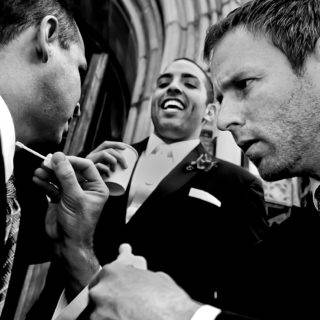
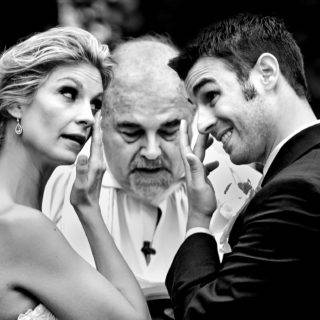
The ceremony is also where documentary photography becomes especially valuable.
Not every meaningful photograph is a major event.
Sometimes it is a parent smiling in the background.
Sometimes it is a friend wiping away a tear.
Sometimes it is the couple briefly looking at each other while everyone else is watching the ceremony.
Those moments should not need to be listed individually.
They need to be noticed.
Family Wedding Photo Shot List
Family portraits are one part of the day where a specific list is particularly helpful.
Your photographer knows how to photograph family groups, but they cannot know every relationship within your family.
This is especially important when there are blended families, divorced parents, stepfamilies, large extended families, or relatives traveling from different places.
Current wedding photography guidance consistently emphasizes communicating the specific family combinations you want rather than leaving the photographer to guess.
Essential Family Combinations
You might consider:
- Couple with both sets of parents
- Couple with one partner’s parents
- Couple with the other partner’s parents
- Couple with siblings
- Couple with parents and siblings
- Couple with grandparents
- Couple with immediate family
- Couple with extended family
- Couple with nieces and nephews
- Couple with important relatives
- Each partner separately with their parents
- Each partner with siblings
- Couple with godparents or other significant people
Do not copy a generic family list blindly.
Customize it.
If there is someone who traveled thousands of miles to attend your wedding, that person may deserve a dedicated photograph even if they do not appear on a standard wedding checklist.
How to Make Family Portraits Faster
Family portraits can take longer than expected because people wander away, conversations continue, and someone is inevitably missing from the group.
Choose a trusted person from each side of the family who knows everyone and can help gather people.
Give that person the final list.
Your photographer can then focus on photographing rather than searching for relatives.
Keep the list organized from larger groups to smaller combinations when possible.
For example:
- Couple + both families
- Couple + one family
- Couple + parents
- Couple + siblings
- Smaller individual combinations
The exact order should be planned with your photographer because lighting, location, family availability, and the wedding timeline can change what works best.
Wedding Party Photography Shot List
Wedding-party photographs should include both formal and relaxed variations.
Consider:
- Full wedding party
- Couple with entire wedding party
- Couple with bridesmaids
- Couple with groomsmen
- Partner with bridesmaids
- Partner with groomsmen
- Wedding party walking
- Wedding party laughing together
- Wedding party interacting naturally
- Individual portraits with maid of honor
- Individual portraits with best man
- Friends helping with clothing
- Candid wedding-party moments
You do not need twenty versions of the same group standing in the same position.
One well-composed formal photograph and a few natural variations can tell a much better story.
Couple Wedding Portrait Shot List
Your couple portraits deserve time, but they do not need to feel like a fashion shoot unless that is what you want.
A strong wedding photographer can create a mixture of guided portraits and genuine interactions.
Consider photographing:
- Full-length portrait
- Close portrait
- Couple looking at each other
- Couple looking toward the camera
- Walking together
- Holding hands
- Embracing
- Kissing
- Laughing
- Quiet moment together
- Veil movement
- Dress movement
- Architectural portrait
- Environmental portrait
- Portrait using the venue
- Portrait outdoors
- Golden-hour portraits, if timing allows
- Night or reception portraits, if appropriate
The best photographs often happen between the formal instructions.
A photographer may position you in good light and then give you something simple to do: walk, talk, look at each other, or move closer.
That creates room for authentic reactions.
Candid Wedding Photography Shots
Candid photographs are not necessarily photographs taken randomly from a distance.
Good documentary wedding photography requires observation.
Some moments worth watching for include:
- Parents seeing the couple
- Friends laughing together
- Guests arriving
- Children playing
- Emotional reactions during speeches
- Guests embracing
- Couples talking with friends
- Grandparents interacting with family
- Guests laughing at dinner
- Someone dancing before the dance floor officially opens
- Behind-the-scenes vendor moments
- Quiet moments between major events
- Couple interacting with guests
- Guests reacting to the couple
- Unexpected moments
This is the part of the wedding that cannot be fully predicted with a checklist.
It is also why you want a photographer whose approach leaves room for spontaneous photographs.
Wedding Reception Photography Shot List
Once the reception begins, the pace changes again.
Your reception photography checklist can include:
- Reception venue exterior
- Reception room before guests enter
- Table settings
- Centerpieces
- Place cards
- Menus
- Wedding favors
- Cake or dessert display
- Head table
- Lighting
- Floral décor
- Couple entering
- Couple at the reception
- Toasts
- Reactions during speeches
- First dance
- Parent dances
- Guests watching the dances
- Dinner
- Candid table interactions
- Cake cutting
- Dessert
- Dance floor
- Guests dancing
- Couple dancing with friends
- Wedding party dancing
- DJ or musicians
- Grandparents dancing
- Children dancing
- Group celebrations
- Final dance
- Grand exit
If your reception includes cultural traditions or special performances, add those specifically.
Do not assume your photographer will know that a particular ritual is happening unless you have discussed it.
Wedding Exit Photo Shot List
If you are planning a formal exit, let your photographer know ahead of time.
Potential photographs include:
- Guests lining up
- Couple preparing to leave
- Couple walking through guests
- Confetti
- Sparklers
- Petals
- Bubbles
- Cheers
- Couple getting into the car
- Guests waving
- Final kiss
- Vehicle departure
If you are not having a formal exit, you can still create an ending to the photographic story.
A final portrait together, a quiet moment outside the reception, or a photograph of guests celebrating can provide a natural conclusion.
What Wedding Photos Should You Absolutely Have?
There is no universal list of photographs every couple must have.
However, most couples will want some version of the following:
- Getting-ready photographs
- Wedding details
- Family portraits
- Wedding-party portraits
- Couple portraits
- Ceremony processional
- Vows
- Ring exchange
- First kiss
- Recessional
- Reception details
- Toasts
- First dance
- Parent dances
- Cake cutting
- Candid guest photographs
- Dance-floor photographs
- Final photographs of the couple
The exact list should reflect your wedding.
If you are having a small dinner instead of a traditional reception, there is no reason to create a checklist built around a large dance floor.
If you are having a destination wedding, travel and location may become a major part of the story.
If you are having a multi-day celebration, the list should cover the events that are most meaningful to you.
What Should Not Be on Your Wedding Photography Shot List?
A common mistake is making the list too long.
You do not need to specify every possible candid photograph.
You do not need to tell an experienced photographer to photograph every laugh, smile, kiss, or dance.
Those are part of the photographer’s job.
Instead, use your list for things your photographer cannot know without you.
That includes:
- Specific relatives
- Important family combinations
- Personal heirlooms
- Cultural traditions
- Special details
- Surprise moments
- Important guests
- Private moments you want photographed
- Photographs you have discussed with your photographer
- Anything that is unique to your wedding
This leaves your photographer free to document the rest of the day creatively.
Should You Give Your Photographer a Shot List?
Yes, but talk through it rather than simply sending a massive document the night before the wedding.
Share your priorities early enough for your photographer to understand the timeline and plan accordingly.
A useful shot list should answer three questions:
Who needs to be photographed?
What needs to be photographed?
When does it need to happen?
That information is far more valuable than a long list of generic poses.
Current wedding photography resources also emphasize sharing the finalized list ahead of the wedding and identifying non-negotiable photographs separately from optional ideas.
How Many Photos Should Be on a Wedding Shot List?
There is no magic number.
A full wedding can easily contain hundreds of meaningful photographic opportunities, but that does not mean you should create a list containing hundreds of mandatory shots.
Your photographer will capture many photographs that you never specifically requested.
A better approach is to separate your list into:
Must-Have Photos
These are photographs you definitely want.
Important Family Combinations
These are photographs that require specific people to be present.
Personal Details
These are meaningful objects, traditions, or details that your photographer might not know about.
Creative Ideas
These are photographs you would love if the timing, weather, location, and light allow them.
This hierarchy gives your photographer flexibility.
How Early Should You Send Your Wedding Shot List?
Do not wait until the wedding morning.
Your photographer should have enough time to review the list, discuss priorities with you, and understand how the requested photographs fit into the timeline.
A final planning conversation is also useful because some photographs affect where and when you need to be.
For example, a family portrait list affects the amount of time needed after the ceremony.
A first-look portrait session affects the pre-ceremony schedule.
A sunset portrait request affects the reception timeline.
A special cultural tradition affects when your photographer needs to be in position.
The list is therefore part of the overall photography plan not a separate document.
Wedding Photography Shot List vs. Candid Photography
You do not have to choose between a shot list and candid photography.
The two work together.
The shot list handles the things that cannot be guessed.
Documentary photography handles the things that cannot be planned.
That combination is one of the reasons an experienced wedding photographer can be so valuable.
Matthew Sowa Photography describes its approach as a combination of photojournalism, portraiture, and artistic direction, with an emphasis on allowing the wedding to unfold naturally while creating intentional, composed images when needed.
That balance means your wedding photographs do not have to look like a checklist.
They can look like your actual wedding day.
Why Your Photographer’s Experience Matters More Than a Huge Checklist
A long list cannot replace experience.
Your photographer has to make decisions in real time.
The light may change.
The ceremony may run late.
A family member may disappear.
The weather may change.
The couple may have only fifteen minutes instead of thirty.
A meaningful moment may happen unexpectedly.
A photographer needs to know what matters most and how to adapt.
Matthew Sowa has photographed more than 800 weddings and describes his approach as unobtrusive, documentary-focused photography balanced with contemporary portraiture. His portfolio emphasizes emotional moments, relationships, movement, and the atmosphere of the wedding rather than simply reproducing a standard checklist.
That experience is particularly important when you want your wedding photographs to feel both natural and carefully crafted.
Questions to Ask Your Wedding Photographer About Their Shot List
Before hiring a photographer, ask:
Do you have a standard wedding photography shot list?
This helps you understand whether they already have a reliable system for covering the day.
Can we customize the shot list?
You should be able to add important family members, traditions, details, and personal priorities.
How do you handle family portraits?
Ask how they organize group photographs and how much time they recommend.
Do you photograph candid moments in addition to requested shots?
This tells you whether the photographer’s approach is primarily checklist-driven or documentary.
Can we see a full wedding gallery?
A full gallery shows how consistently a photographer works throughout an entire wedding—not just their favorite ten images.
How do you balance portraits and documentary photographs?
If you want a mixture of natural moments and polished portraits, this is an important conversation to have before booking.
What Makes a Wedding Photography Shot List Actually Useful?
The best wedding photography shot list is not necessarily the longest.
It is the one that helps your photographer understand what matters to you.
It should identify the people you cannot miss, the details that have meaning, the family combinations that need to happen, and any special traditions or moments that are unique to your wedding.
Everything else should leave room for the photographer’s experience.
Because some of the photographs you treasure most will probably never have been written on your list.
They may be the expression your father makes before walking you down the aisle.
The way your partner looks at you when you are not paying attention.
Your friends are laughing during cocktail hour.
Your grandmother is dancing.
Your parents are watching the first dance.
A quiet moment between you and your partner after the ceremony.
Those photographs are not checklist items.
They are the story.
Build Your Shot List Around Your Story
A wedding photography shot list should give you peace of mind, not another wedding-planning assignment.
Start with the photographs you absolutely want.
Add the people and details that are personally important.
Discuss the timeline with your photographer.
Then leave room for everything you cannot predict.
That is where documentary wedding photography becomes valuable.
A photographer should know what needs to be captured while remaining alert enough to see what happens naturally around it.
For couples planning a wedding in New York City, Matthew Sowa Photography approaches wedding coverage with that combination of observation, creative direction, and contemporary portraiture. The goal is not simply to produce a collection of technically correct wedding pictures. It is to create a visual record of the people, atmosphere, emotion, and moments that made your wedding yours.
Your shot list can tell your photographer what matters.
Experience allows them to see everything else.
Frequently Asked Questions
What is a wedding photography shot list?
A wedding photography shot list is a list of important photographs you want your photographer to capture during the wedding. It typically includes getting-ready photos, details, ceremony moments, family portraits, wedding-party photos, couple portraits, reception events, and any personal must-have images.
What photos should be on a wedding shot list?
A useful list usually covers getting ready, wedding details, the first look if applicable, ceremony, family portraits, wedding party, couple portraits, reception details, speeches, dances, cake cutting, candid guest photographs, and the final moments of the celebration.
Do wedding photographers have their own shot list?
Many experienced wedding photographers have a standard workflow or checklist covering the major moments of a wedding day. Couples should still provide specific family combinations, personal details, cultural traditions, or other photographs that are unique to their wedding.
How many photos should be on a wedding photography shot list?
There is no required number. A shorter list of important priorities is often more useful than an extremely long list. The photographer should have room to document spontaneous moments in addition to the requested photographs.
When should I give my wedding photographer the shot list?
Give your photographer the list before the wedding and discuss it during your planning process. This allows important photographs to be incorporated into the timeline, particularly family portraits, first-look photographs, and other time-sensitive requests.
What family photos should we take at a wedding?
Common combinations include the couple with both families, each partner with their parents, siblings, grandparents, immediate family, and the wedding party. The exact list should reflect your family structure and the people who are especially important to you.
Do I need a shot list if I want candid wedding photography?
Yes, but the list should be used as a guide rather than a script. It can identify specific people and details while your photographer remains free to capture spontaneous moments throughout the day.
Should we make a shot list for wedding details?
Yes. Include meaningful details such as rings, invitations, jewelry, shoes, family heirlooms, stationery, flowers, personalized décor, and other items that are important to your wedding story.
Can a wedding shot list make photography take longer?
A poorly organized list can. A focused list can actually make formal photographs more efficient because everyone knows which combinations are required. The key is to prioritize rather than trying to photograph every possible combination.
What should I tell my photographer that isn’t on a standard shot list?
Tell them about people they may not know are important, meaningful heirlooms, family circumstances, cultural traditions, surprise moments, privacy considerations, and any photographs that would be especially meaningful to you.
Final Wedding Photography Shot List Checklist
Before your wedding day, make sure you have discussed:
Getting Ready
- Dress and outfit
- Shoes and accessories
- Rings
- Hair and makeup
- Parents and friends
- Final preparations
- Emotional moments
Details
- Invitations
- Flowers
- Jewelry
- Family heirlooms
- Ceremony décor
- Reception décor
- Personalized details
First Look
- Reveal
- Reaction
- Hug
- Couple portraits
- Natural interactions
Ceremony
- Guests arriving
- Processional
- Partner’s reaction
- Vows
- Rings
- First kiss
- Recessional
- Family reactions
Family
- Parents
- Siblings
- Grandparents
- Immediate family
- Extended family
- Important relatives
Wedding Party
- Full group
- Individual sides
- Maid of honor
- Best man
- Natural interactions
Couple
- Formal portraits
- Walking
- Looking at each other
- Embracing
- Kissing
- Environmental portraits
- Sunset portraits if possible
Reception
- Room and décor
- Tables
- Toasts
- First dance
- Parent dances
- Cake cutting
- Guests
- Dancing
- Candid moments
Exit
- Final portraits
- Guests celebrating
- Formal exit
- Couple departing
The purpose of this list is not to control every photograph.
It is to make sure the photographs that matter most to you are communicated clearly—while your photographer has the freedom to capture everything you never thought to request.
That balance is what turns a wedding photography checklist into a wedding story.